Selasa, 18 Agustus 2009

Sirih Flower’s

sirih Sirih Flowers


Is the name of the betel vine type plants that rely on other trees. Culture as leaf and fruit normally eaten together with the gambier chewing, areca nut and lime. However, betel chewing has been associated with the disease of cancer and the formation of mouth squamous cell carcinoma of malignan.

Foreword used as a medicinal plant (fitofarmaka); very influential in the life of the various ceremonies and traditional Malay family.

Gynecology and the benefits

Atsiri oil from betel leaves contain oil fly (betIephenol), seskuiterpen, starch, diatase, sugar and oxygen samak and chavicol has power off the germ, and antioksidasi fungicide, anti-fungus. Foreword nutritious eliminate body odor caused bacteria and fungus. Betel leaves are also holding bleeding, heal wounds on the skin, alimentary tract, and interference. It also can be mengerutkan, removing the phlegm, saliva cause to fall, hemostatik, and stop the bleeding.

Usually the medicine for the nose bleed, use 2 pieces of Piper betle leaves fresh, washed, digulung then inserted in the nose Iubang.

Usefulness

1. Cough
2. Sariawan
3. Bronchitis
4. Whelk
5. Keputihan
6. Toothache because perforated (leaves)
7. Dengue fever
8. Mouth odor
9. Menstruation is not regular
10. Asthma
11. Sore throat (leaves and oil)
12. Gumboil (getahnya)
13. Clearing the Eye

Use of Foreign

1. Eczema
2. Burns
3. Ulceration (pyodermi)
4. Foot mange
5. Blain
6. Nosebleed
7. Eye pain
8. Gum bleeding
9. Reduce the production of breastmilk
10. The itch

Read more...

Minggu, 16 Agustus 2009

Caring for Plants: Indoor and Outdoor While Rainy

Indoor and outdoor plants do not let time penghujan arrived as a result can be fatal Iho. Ada Kok keduanya.Penghujan for special treatment is a season that should diwaspadai for hobis indoor and outdoor plants. Why? For the rainy season can make the plant can die quickly. This is due to the humid conditions caused the rainy season is.

A clear micro humidity around the plant escalate. As a result ditumbuhi vulnerable plant fungus and bacteria. How do I treat this plant during the rainy season?
During the rainy season, plants must often dipangkasi. Trimming leaves this function to reduce the humidity in the plant maikro. What leaves that need to be trimmed? The leaves must be trimmed is the cause of excessive moisture around the plant stem.

Most types of tabulampot leaved must have a thick trimming process. Leaves the young leaves are trimmed or susu that lead to growth in the plant stem. Javanese term commonly called the shoot wiwilan. Because the cause of so high humidity in the plant, the shoot should be cut this time. Shoots in this plant is rarely kebagian sun. So that the process of change quickly. Moreover, if not routine hujannya. Nah, dolomite is a function of soil pH menyetabilkan so easy to keep the plant roots absorb burly.

The provision of this dolomite is quite easy. For plants that are in the pot berdiameter 40 s / d 50 cm, providing enough dolomite 5 tbs ditebar the way around the surface. Most suitable ditebar earlier when the rainy season. With dolomite, leaves the plant avoid contamination. Decaying leaves marked with yellow color of dried cacao ago.

This has advantages capable of holding water and the pH is not easy to go down.
When it rains, the media need to be diminished only slightly. Example cases in orchid pot. When using charcoal medium, the amount should be reduced arangnya time penghujan. When the root of the orchid not involve the charcoal, the charcoal should be taken. This is to avoid contamination in the stem and root of the orchid. When the new season, the charcoal can ditambahi again. This is the difference in treatment between the rainy season, the indoor plants bermedia not the land.

Tip three is to give NPK fertilizer. This fertilizer is easy pemakaiannya. This is the planting medium in 15 cm far from the plant stem. When exposed to rain water, fertilizer will dissolve itself in the ground. If done at the kemarou, the fertilizer is horus dilarutkon dolam water first, then disiramkan around the roots.
Tip four is penyemprolan fungicide. Spraying fungicide can be mixed with insecticide.

To avoid the penyemprolan futile, see the weather conditions first. When this day and tomorrow does not rain, Mako tomorrow either eject most of the second line. Or if this sunny morning, the material can be disemprotkan. This medicine will dry out and coat the plants within 2-3 hours after spray.

Spraying is done it 2 times a week. Effective spraying be done morning and evening. Morning between 06.00 s / d 08.00. Because the morning when the stomata open wider and more active insect attack on the target so that appropriate. Try using a small spray and spray on the leaf surface of the bottom of the nest because it is a place where pests.

Tip five is to penggemburan and weeding the soil. Outdoor plants that use soil media should digemburkan. This serves to improve the physical nature of the land, especially to improve porositasnya.

Sixth tip is to place a pot over high ground. Fungsinya agar terhindar dari genangan air. Some of the city or area in your home, would be affected by flood or stagnant water in part. Pot the stagnant akan always make the ground moist, this is fatal because it can to root rot. Most easy way is to place a pot on a rack or pile. (agrobis)

Read more...

Jumat, 14 Agustus 2009

Tips to make more Aglaonema

 Tips to make more Aglaonema
There are many techniques on how to multiply and produce superior Aglaonema. Here is a technique used Handry owner Chuhairy Han Alam Flora in the Garden Silk Aglaonema reproduce in Tangerang in a short period of time that is the way cangkok using a plastic pot orchid seeds / glass former drinking water in the packaging, such as Aqua / Tang etc. 2. These are the stages pencangkokannya:
Unidentified%20Plant%203 Tips to make more Aglaonema
1. Akan dicangkok the plant must be healthy, free of pests and diseases. Trunk Aglaonema already high from the surface of the media. (High stem Aglaonema determine the number of cangkokan).
2. Prepare the plastic pot orchid seeds / glass former drinking water in the packaging. For plastic pot orchid seed-piece with a vertical cutter while the glass former drinking water should be made in the packaging, beneath the hole and then cut vertically with a cutter, to cut the top with scissors.
3. Aglaonema stem the akan dicangkok, if there is still leaves the leaf is removed and stem curette is about 1 cm and be oiled with a root hormone stimulation. Pot plastic vertical cut together with a stapler.
4. Fill a plastic pot with media that have been roasted husk disiram. Treatment plants that have the same dicangkok before dicangkok. Sprinkling is done 2-3 hours once a week and 2 times disiram with vitamin B1.
5. 2 months and then will grow roots and visible from behind the plastic pot. When it is cangkokan can be separated from the parent. (If the stem in 1 Aglaonema there are 2 / 3 cangkokan, make sure cangkokan top must be the root of ditumbuhi can be separated so that each, if not then start from the bottom gradually).
6. Separate each cangkokan which has grown with the root of the sterile and sharp knife cut the stem at the exact bottom of the pot is plastic. Then, before planting, cut the stem at the bottom of the fungicide be oiled (dithane 45). Cangkokan plants with planting medium consisting of husk fuel, sinister sand, dolomite lime secukupnya comparison with 3: 1. Siram plant cangkokan with vitamin B1.
New%20047 Tips to make more Aglaonema 7. Next cangkokan the treatment plant as the other.
8. Knob on the top of the parent be oiled salep growth hormone sitokinin and auksin already in common use on orchids “KEIKI”. (Sitokinin function to stimulate cell division didaerah shoot side (lateral) while auksin a role in cell division the ends of the shoots (apical bulb). In general, appear 1-2 weeks 3-4 Anakan. Anakan new usually separated after 4-5 leaved leaf sheets.

Read more...

Rabu, 12 Agustus 2009

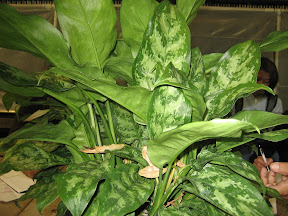
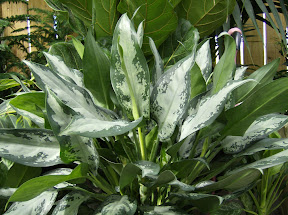
Aglaonema

Aglaonema%2C%20Bambang%27s Aglaonema
Aglaonema have long since attempted culture up through the network. But this time the new results show. IS THAT BERHASIL MONFORY NUSANTARA. THE METHOD ORGANOGENIS, using a cutting edge stem shoots. Total there are around 15 hybrid Aglaonema that shows good performance in the laboratory and nursery owned Monfory in Bogor, West Java. “Since approximately two years ago we conducted an experiment on hybrid 30 and later we added 12 hybrid,” said Suzy Ratnawati Madjid, Plant Manager Monfory archipelago. Results kuljar have to go to nursery division adapted and grew up ready to be marketed. Among others, Lady Valentine, Cochin copper, Red fire, lipstick flamingo, and Madonna. Silangan Gregory Hambali kinds Madame Suroyo, Adelia, and Siti Nurbaya also already started production. “Now we can generate total 2000 Anakan silangan Aglaonema monthly. But the number increased akan terns,” go Suzy.
Tissue culture techniques in plant leaves berjuluk queen is similar to the procedure kuljar (cultural network) other ornamental plants. Aglaonema cycle but have kuljar longer. “If the caladium and alokasia only take 4 weeks to grow and eksplan ready to cut back. But Aglaonema take up 5-6 weeks,” said Suzy. This phase is called ordinary subkultur through micro stek.
Aglaonema%20sp.1 Aglaonema
But the major problem in the process of sterilization is kuljar Aglaonema eksplan. If eksplan terkontaminasi, will not be able to grow. Setup save plants endogen bacteria that could be different. “We do a lot of trial and error £ t find a specific technique and successful sterilization. Materials for sterilization exactly as we use for other ornamental plants,” continued Susy.

After the sterilization process is successful, try to stay-try media concoction and hormone most fitting that the maximum growth. Monfory use media kuljar solid MS-based media.
 Aglaonema
“But with some modifications and adding a certain hormone compound. Eksplan cutting technique is also different,” he added.

KULJAR HEMAT
Culture networks scale home for a local plant called Sri Rejeki already tried this. Like

conducted by Novi Syatria in Klender, East Jakarta. But not one hundred percent successful, the problem of sterilization is still a constraint. “Eksplan in sight but still terkontaminasi grow bacteria. I’m trying with additional anti-bacterial formula that good results on other plants,” said University of Bengkulu down.

Novi eksplan perform sterilization before planting. Discount derive stem shoots washed with running water and detergent. Then in the Shaker-in fungicide solution and rinsed with water stern. Followed soaked fungicide solution, rinsed clean water to stern.

Third step is carried out 30 menu masingmasing Last soaked in 70% alcohol solution while digoyang and rinsed 5 times with water. The process of network culture, according to Novi, the scale can be done in the home. Can use
equipment that is affordable. Such Laminar air flow, such as the stern, can be replaced with the incase that could be on the glazier. Autoclaf can be replaced with pan presto, provided that temperature can exceed 100 ° C. The use of solid mediaa unnecessary engine Shaker. If you use a media buy, no need to scale and measuring tool. Perlengkapan bottles can also be replaced. But need to keep cool space that is diisolasi culture. For the beginners can take advantage of air-conditioned rooms.
“The basic work can only be learned in one day, the rest through practice,” continued the Novi kuljar frequent training.

Nah, you can try it out. ~

PHASE KULJAR
1. Media cooked incoming bottles, inserted autoclaf for 1 hour. Make sure that sterile up to 3 days.
2. Tool that would be used in disterilisasi first autoclaf.
3. Sterilization equipment, if the laminar, place in a closed laminar and UV light

light it up.
4. Laminar opened, blower and lights a flame, spray 70% alcohol. ”
5. Materials and equipment disemprot alcohol.
6. Eksplan material cut from a healthy parent.
7. Sterilization and eksplan cutting outside and work in the tool (or in the laminar case).
8. Eksplan planted, use tweezers that have been burned and dyed fire bunsan sterile water. Mouth

bottles bunsan fire also burned.
9. Bottles are placed in sterile rooms bersuhu cool until ready dimultifikasi through road stek

micro.

Silangan Local chirk
Aglaonema most successful dikembangbiakkan through such technology is cloned in the hybrid hash Monfory contradiction Thailand. Aglaonema silangan while Gregory Hambali in Bogor, not optimal. “Perhaps influenced material silangan, Thailand silangan offspring Cochin rugs have long foreshadow more rapid growth. Rotundum with the descendants of the beruas short,” said Levi Weather Pohar, marketing manager Monfory archipelago. “Kuljar use media concoction and the same formula, the growth of local Aglaonema still not as fast as silangan Thailand,” added Suzy. Hormone-specific ingredients required. Until now,

Monfory have 28 ingredients to make the media to initiate 12 species of plants.

Read more...

Senin, 10 Agustus 2009

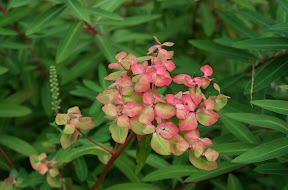
Caring for and lend Adenium and Euphorbia

Euphorbis %28Silver Anniversa Adenium and Euphorbia

Caring for and lend Adenium and Euphorbia
To have easy Adenium and Euphorbia flowering, it needs to be done includes the sprinkling treatment, fertilization, pruning, and the media The pot plant, and pest and disease control in an integrated fashion. Things to note are as follows:
IMG 8186 Adenium and Euphorbia

Embed media.
 Adenium and Euphorbia
Media work for the plant:

Place the root of plant growth
Shore plants that grow well
The provider of water and fertilizer
851775 arabicumdwarfmedusa Adenium and Euphorbia
Media planting must have a good terms as follows:

Does not contain seeds, and pest and disease free weeds.
Able to accommodate the water, but also able to remove / drain the excess water.
Crumb and porous, so the roots can grow and develop the planting media penetrate easily.
Degree of acidity (pH) between 6.0 to 6.5
Media up to 0.5 EC

Adenium Plant Euphorbia and more like the media is able to dry and remove excess water rapidly. Thus, in PT Godong Ijo Asri, media Adenium and Euphorbia plant uses a mixture of coconut fiber dust, husk fuel, zeolit gravel, and sand. All media type plant is already over before it is through the sterilization process to kill the seed of disease and weed seeds. While the land is not used because the land in Indonesia the average is less porous, containing many weed seeds and disease, and less able to drain off excess water.

Advantages and weaknesses of each of the planting media used are as follows:
AA0005 big Adenium and Euphorbia
Husk fuel. Husk fuel derived from rice husk disangrai until the black shapes, but still intact and not to be gray. With this disangrai, husk charcoal at the same time to be sterilized, because the temperature is high and seed diseases of rice seed remaining akan mati. Charcoal husk is a porous media, but less able to water. Therefore, in use, is mixed with other media that are able to accommodate the water.

Powder coconut fiber (coco peat). Coco peat fiber derived from coconut that has been separated from the fiber, and has been boiled to remove tanin substances (substances that can mematian plants). With boiling, sterilization means also to remove the seed-seedling diseases that may have therein. Coco peat can store a lot of water, and when used must be mixed with other media so that excess water can be removed.

Sand. Sand used for the planting media is river sand that has been filtered so that no dirt form of land, and then boiled for sterilization. Sand beach can not be used because there is salt in it. In use, the sand is usually mixed with other media, because the sand is not capable of binding water.

Zeolit gravel. Green stone zeolit young, is the rock that is able to accommodate the manure disiramkan him, and can also reduce the chemical elements that are toxic to plants. Stone zeolit in use as a planting media parsed first into gravel, so that the size suitable for planting media.

Styrofoam. Styrofoam or foam is white, used a part of the planting media is just that the media do not plant too densely. In use, cut or sliced stirofoam of dice, and placed didasar pot.

Please note that all the media over the plant, is a waste. Hull is a waste of rice, coconut fiber dust from the waste industry is the making of coconut fiber fiber (industrial seat, mat, etc.), river sand used is a coarse sand (the rest of the housing development), while the gravel zeolit from the waste rock is processed for zeolit elements of the house wall. Planting media is media that is also found in large enough amount, so it can be used to supply mass-scale agriculture.

Some other types of media that can be used by the hobiis are as follows:

Fern (fern chopped before use),
Spagnum moss,
charcoal, wood, etc..

However, the media is difficult to find many in number, so it is rarely used for planting crops sekala.

Please note that the various planting media used above does not contain elements of fertilizers at all. Differentiate with manure or compost containing manure that has been, but have less requirements for a good planting medium for Adenium and Euphorbia

Read more...

Sabtu, 08 Agustus 2009

Adenium Arabicum Dwarf

603593 img 3266 Adenium Arabicum Dwarf
Previously, there is surely still among us who are confused with the meaning of the word meaning Arabicum Dwarf, which means the plant is actually the type of Adenium Arabicum the kuntet, its branches does not boast, while the caudex (lower knob) will widen, with the contraction-contraction appeared akan on the effect of too kuntet this. Until he appears to be so exotic.
1230224 arabicumdraftblackknight Adenium Arabicum Dwarf
There are 2 characteristics that karaktersitik need to be out of shape or Dwarf Bonsai Arabicum is as follows:

First, the skin stem look very wrinkled (very wrankle), darker colors, and many fold-fold (many joints). Skin color is dark as to the size of the image in the top of the marked growth will stop, especially the main branch (slowed), or grow slowly but will be growing caudex chubby (fat).
587399 img 3387 Adenium Arabicum Dwarf
Second, remain stable, with many short branches in the fat caudex. So that is very interesting because the antique and classic look.

Two characters on top of things can be set and measurements of the quality of a form of Bonsai Dwarf Arabicum or Arabicum.

Meanwhile, there are three types of hybrid Arabicum that can produce the form of Dwarf Arabicum with good quality, ie, Petch Na Wang, barrel and Sing Bu Ri Ri Bu.

Step by Step Making Dwarf

There are several steps in creating or Dwarf Bonsai of them as follows:

The first step:
We choose only the seeds from which
fresh and healthy from the three types above.

Step two:
musti we use the special media, including the degree and the sprinkling of water, which can enrich the growth of seeds that grow better and faster and the best form.

Step three:
After the seeds sprout grow from a special media between 2-3 days, we observe the growth of seedlings carefully and follow the stages of growth until the age of 6 months

Step four:
Answer form is shaped like a crown (crown) with a fat caudex skin and ensure a green branch. Branch means the green seedling can grow large and large. Some may be able to grow tergoncang time, before the truly healthy that can eventually lose their good form.

After 6 months of Dwarf akan becomes stable. Now decide whether the stay will be a form of large or bonsai (dwarf), which will affect the future growth.

Read more...

Kamis, 06 Agustus 2009

How To Seed Adenium

By using the media plant:

* Prepare media seeding seed. Berdiameter pot can be a 30 or 40 cm, or can also use a special tray for seeding.
* Media that seeding can be used is cocopeat (coconut fiber), which are sold in many shops saprotan, mixed with bran and roasted secukupnya hapless sand. Comparison of 2:2:1.
* Enter the media page to the seedling in a pot or tray as 3/4-nya earlier.
* Sprays with water media using sprayer.
* Make the planting hole, can use a pencil or index finger, about 1 cm deep with the distance between the holes about 1.5 cm.
* Enter the seeds one by one into the holes before.
* Put the seedsAdenium with sleeping position. So do not randomly assigned.
* Cover the seeds with the same planting medium on top of it.
* Spray the top of the media again until wet with the sprayer. (There are some laborers, and then cover the pot or tray with plastic or to remain moist.)
* Put in the shade, with sunlight and air circulation is good (windy).
* In the time 7-10 days, the seeds will sprout into a
* After high shoot reach around 5-8 cm, and have 3-4 pairs of leaves, shoot-shoot can be moved to earlier in the pot itself.
* Is ready to shoot it dried gradually.

Read more...

About This Blog

  © Blogger template AutumnFall by Ourblogtemplates.com 2008

Back to TOP